
Begin with observation,
not a stronger product.
Make a short record before cleaning or correction changes the evidence. You are describing the condition, not conducting a survey or deciding whether the glazing is fit for service.
Identify the pane.
Use a location that another person can recognize, such as “port cabin side, forward pane” or “centre helm windscreen.” Note which side of the glass appears affected.
Describe the pattern.
Are there separate water spots, an arc matching the wiper sweep, fine scattered scratches or a cloudy area that seems to sit within the panel? Record separate concerns separately.
Change your viewpoint.
Look at the surface and through it from normal positions. Note when the marks become most noticeable. Light, background and angle can change what a photograph reveals.
Check the history.
Find any glazing details and list cleaners, coatings or previous correction work. If something is unknown, leave it unknown rather than making an assumption.
Photographs should include an overall view, a closer view of the concern and a view through the pane. Do not dismantle a frame or carry out a scratch, solvent or abrasive test to gather information.
Spots, deposits & staining
First ask what is
resting on the glass.
“Water spots” describes an appearance. It does not establish whether the mark is removable material, a change in the glass surface or an issue with a treatment applied to it.
Start with the maker’s cleaning instructions for the identified surface. If the marks remain, record the product and method used. Repeatedly increasing the strength of a cleaner can complicate the assessment, especially when a coating is unknown.
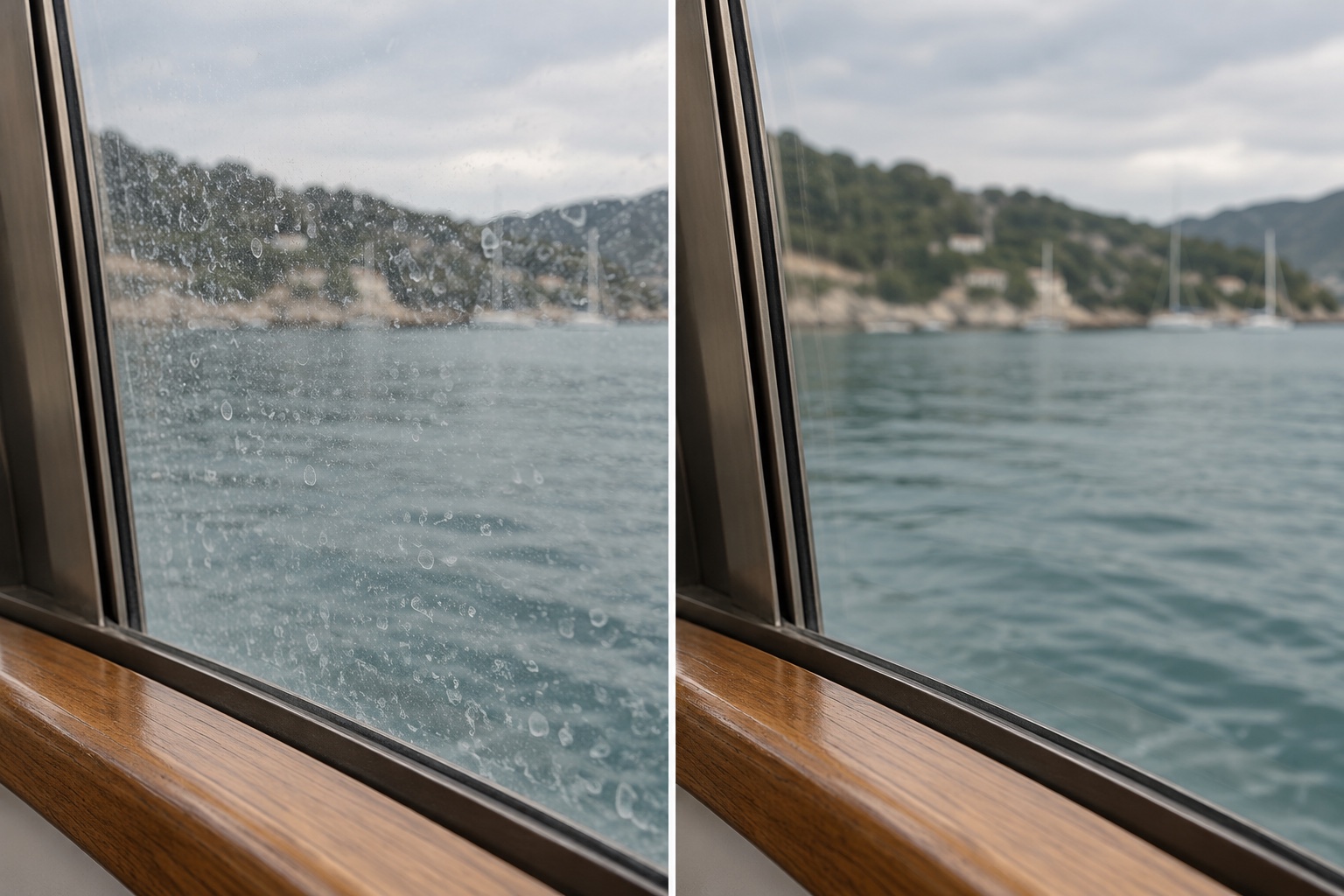
In a restoration discussion, distinguish deposit removal from surface correction. The first concerns material on the pane. The second concerns the condition of the accessible glass itself. They should not automatically be treated as the same job.
A useful question: “What indicates that this is a deposit, and what will we check if appropriate cleaning does not remove it?”
Scratches & wiper marks
Extent, depth
and viewing position.
A wiper-shaped arc, a fine scratch in a cabin window and a deeper isolated line may call for different decisions. Describe the affected area and its importance to the normal view, not just the most visible mark.
A simple fingernail check is not a complete assessment. It does not identify the coating, establish the glass specification or predict the optical result of correction. Avoid turning an informal rule of thumb into an instruction to remove more material.
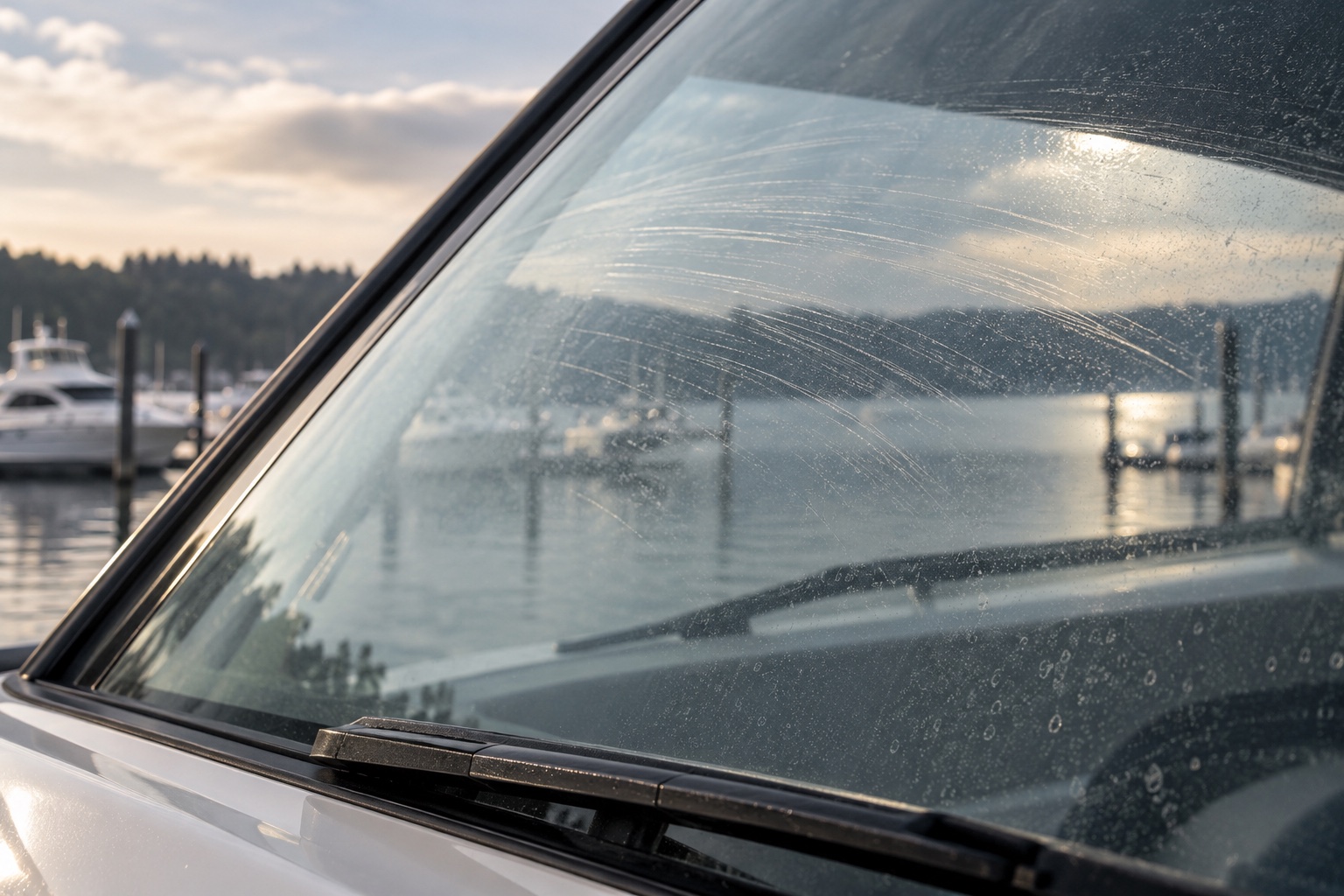
Ask about the least extensive suitable treatment, the purpose of a test and any marks expected to remain. For a helm pane, include the normal sightline in the review criteria. A close photograph of the surface does not show everything an owner needs to judge.
Keep a new wiper arc separate from older scattered marks in the record. If the pattern is continuing to develop, tell the person responsible for the vessel’s maintenance so the cause can be considered alongside any cosmetic work. Correcting the surface and preventing another mark are separate decisions.
Haze & cloudiness
Find the affected layer.
Haze can describe a deposit, surface damage, a coating concern, changes in a plastic panel or a defect within the glazing. The word alone does not tell you which service is needed.
External polishing acts on an accessible surface. It cannot reach cloudiness inside a laminate or between panes. If the concern appears internal, seek a marine glazing assessment rather than assuming that exterior polishing will resolve it.
Record whether the change is localized or widespread and whether it begins near an edge. Note visible bubbles or changes within the assembly as observations, not a remote diagnosis.
A bonded window also has to accommodate movement. Sika’s marine guidance treats the bond and the glazing material as parts of a system. A new gap, movement or leak therefore needs a glazing conversation even if the exposed surface also looks marked.
Keep cosmetic and assembly concerns separate. Cracks, edge damage, movement, leaks and failed seals belong in a glazing assessment. A clearer surface does not establish structural condition.
Choose the next conversation.
| What you see | What to establish | Next step |
|---|---|---|
| Persistent spots or staining | Deposit, surface change or coating concern? | Identify the material and assess suitable cleaning or restoration. |
| Scratches or wiper marks | Depth, extent, surface treatment and normal viewing position | Discuss correction and a representative test. |
| Cloudiness within the glazing | Which layer or part of the assembly is affected? | Seek a marine glazing specialist. Exterior polishing cannot reach an internal defect. |
| Cracks, damaged edges or leaks | Pane and assembly condition | Seek qualified glazing advice. Outside Helm Glass’s restoration service. |
| A cloudy plastic or flexible panel | Exact product, material and coating | Use the product maker’s specific care or restoration guidance. |
A small glossary
Useful terms. Plain meanings.
- Optical distortion
- A change in the way a view appears through the glass. Straight lines may look bent or uneven. Surface appearance and optical quality are separate things to review.
- Sightline
- The view through a pane from your normal seated or standing position. A helm sightline belongs in the review of any proposed correction.
- Laminated glass
- Glass layers joined by an interlayer. A concern within that assembly is different from a mark on an accessible outer surface.
- Representative test
- A limited area chosen to show what the proposed method can achieve on the condition being assessed. Agree what it needs to demonstrate before extending the work.
- Scope of work
- The panes, surfaces and tasks included in the agreement, together with the exclusions. A pane list is often clearer than “all the glass.”
- Acceptance criteria
- The agreed way to judge the result: which marks should improve, which may remain, and how the view and finish will be reviewed. Define these while everyone is looking at the same pane.
A condition note
that travels well.
When an owner, captain and yard are discussing the same pane, a short factual note helps everyone start in the same place. Keep observations, unknowns and the desired improvement separate.
Pane: port forward cabin window, outside face.
Observation: scattered spots remain after the usual wash; most noticeable looking toward the light.
Unknown: whether a protective coating was applied.
Priority: improve the view from the saloon seating position.
This describes a concern without declaring it etched, repairable or ready for polishing. Add an overview photograph and the cleaning-product name if available. The technical conclusion can follow the evidence.
If the concern affects a helm sightline, say so at the start. A cosmetic restoration discussion does not determine whether the vessel is ready to operate.